
Many people begin practicing yoga to increase flexibility or relieve stress. While those benefits are well documented, one of the most transformative outcomes of a consistent yoga practice is a significant improvement in body awareness and physical coordination.
In a world filled with digital distractions and sedentary routines, people often become disconnected from their physical selves. This lack of connection frequently manifests as poor posture, frequent clumsiness, muscle imbalances, and an increased risk of injury during daily activities. Yoga bridges this gap by retraining the nervous system to process internal physical cues accurately, allowing for smoother, more efficient, and coordinated movement.
The Science of Proprioception and Interoception
To understand how yoga refines movement, it helps to examine two essential sensory mechanisms that govern human body awareness: proprioception and interoception.
-
Proprioception: Often referred to as the sixth sense, proprioception is the body’s subconscious ability to sense its location, movement, and orientation in space without looking. Specialized sensory receptors called proprioceptors, located in muscles, tendons, and joints, send constant feedback to the brain regarding muscle length and joint angles.
-
Interoception: Interoception involves the internal awareness of physiological sensations inside the body, such as heart rate, respiratory rhythm, muscle tension, and internal pressure.
Modern sedentary habits dull these sensory pathways. Spending hours sitting in static positions reduces the frequency of sensory feedback sent to the brain, causing sensory motor amnesia, where the brain partially forgets how to engage specific muscle groups efficiently. Yoga acts as a direct neural recalibration, systematically reactivating these internal sensors through deliberate movement and focused attention.
How Yoga Enhances Proprioceptive Sensation
Unlike repetitive exercise routines that rely on automatic, mindless movements, yoga demands conscious physical awareness throughout every phase of a pose.
Slow Controlled Transitions
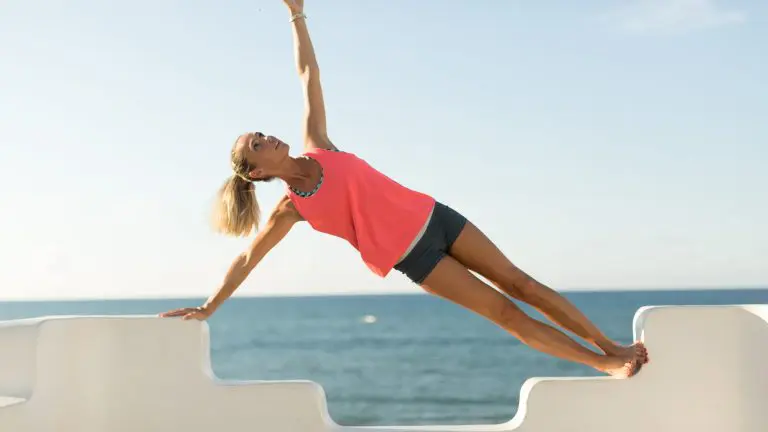
Moving slowly between postures forces the brain to process spatial feedback continuously. When transitioning from a standing position into a complex balance pose like Half Moon Pose (Ardha Chandrasana), the body must dynamically adjust weight distribution, joint alignment, and muscle activation in real time. This deliberate pace strengthens the neural pathways connecting the motor cortex in the brain to peripheral nerve endings in the limbs.
Asymmetric and Multidirectional Movements
Standard linear workouts, such as running or cycling, operate primarily in a single plane of motion. Yoga moves the body across all three anatomical planes: sagittal (forward and backward), frontal (side to side), and transverse (rotational).
Practicing asymmetrical postures, such as Warrior II or Revolved Side Angle Pose, challenges the brain to coordinate different actions on opposing sides of the body simultaneously. For instance, one leg may be flexed in a deep lunging position while the back leg extends firmly, and the arms extend in opposite directions. Managing these opposing actions builds sophisticated spatial awareness and neuromuscular coordination.
Re-establishing Neural Connections and Muscle Synchronization
Coordination is not merely a matter of muscle strength; it is fundamentally an exercise in neural efficiency. Smooth physical coordination requires the brain to recruit the right muscles at the right moment with the correct amount of force.
Agonist and Antagonist Muscle Balance
Efficient movement relies on reciprocal inhibition, a physiological process where one muscle contracts while the opposing muscle relaxes. In yoga, poses continuously train this relationship.
During an intense hamstring stretch, such as Standing Forward Fold (Uttanasana), consciously engaging the quadriceps signals the nervous system to relax the hamstrings deeper. Over time, training these reciprocal loops eliminates internal muscular resistance, resulting in fluid, coordinated movement during daily physical tasks.
Micro-Adjustments in Balance Postures
Single-leg balance poses, such as Tree Pose (Vrksasana) or Eagle Pose (Garudasana), provide an immediate feedback loop for body awareness. When standing on one foot, the body is never completely motionless; instead, it relies on rapid micro-adjustments in the foot, ankle, calf, and core.
These rapid adjustments train stabilizing muscles that are rarely recruited during standard movements. As the foot and ankle adapt to subtle shifts in center of mass, the brain learns to anticipate balance disruptions, drastically improving stability on uneven terrain outside the yoga studio.
The Role of Breath in Movement Integration
A defining aspect of yoga that sets it apart from traditional physical training is Vinyasa, or the synchronization of movement with breath.
Breathing acts as an internal metronome that regulates motor control. Inhaling typically accompanies movements that expand the chest or extend the spine, while exhaling pairs with forward bends, twists, or core contractions.
This rhythmic breathing prevents the breath holding that often accompanies challenging physical tasks, keeping the nervous system calm under strain. A calm parasympathetic state improves fine motor skills and prevents the muscle stiffness caused by stress-induced tension.
Long-Term Benefits for Everyday Life and Aging
Developing heightened body awareness and refined coordination produces practical benefits that extend far beyond the mat, positively impacting overall quality of life.
-
Injury Prevention: Individuals with well-developed proprioception catch themselves quickly when slipping or tripping, preventing severe falls, sprains, or joint dislocations.
-
Posture Correction: Enhanced interoceptive awareness allows individuals to recognize poor postural habits, such as slumping shoulders or forward head posture, and correct them before chronic pain develops.
-
Preserving Mobility with Age: Age-related balance decline is largely linked to a loss of sensory perception in the feet and ankles. Regular yoga practice maintains neural sensitivity, helping older adults retain mobility, confidence, and independence.
-
Enhanced Athletic Performance: Athletes across various sports utilize yoga to refine spatial control, reduce unnecessary muscle strain, and shorten reaction times during competition.
Frequently Asked Questions
How long does it take to see improvements in coordination from yoga?
Most practitioners notice subtle improvements in balance and spatial awareness within three to four weeks of consistent practice. Significant changes in neuromuscular coordination and posture typically develop after two to three months of regular training.
Can beginners with poor balance safely practice yoga?
Yes. Yoga is highly adaptable, and beginners can utilize props such as blocks, straps, or a sturdy wall to support balance. Using props allows newcomers to experience the alignment and proprioceptive benefits of a pose safely without the fear of falling.
Which yoga styles are most effective for building body awareness?
Hatha yoga and Iyengar yoga are exceptional for building body awareness because they emphasize precise alignment and long static holds. For dynamic coordination and fluid movement, Vinyasa or Ashtanga flow styles offer excellent multidirectional challenges.
Why do feet and ankles wobble so much during single-leg balance poses?
Wobbling is a positive sign of active neuromuscular learning. It indicates that sensory receptors in the foot and ankle are sending rapid signals to the brain, and stabilizing muscles are making quick adjustments to keep you upright.
How does conscious breathing directly improve physical coordination?
Conscious diaphragmatic breathing regulates the autonomic nervous system, keeping blood pressure and heart rate stable. This state prevents involuntary muscle tension, allowing the motor cortex to execute smooth, precise movements without physical resistance.
Can yoga help rehabilitate poor coordination after an injury?
Yes. After an joint injury like an ankle sprain, nerve pathways between the joint and brain are often disrupted. Gentle yoga helps retrain these proprioceptive receptors, restoring joint stability and preventing re-injury during recovery.
Is practicing yoga barefoot essential for developing body awareness?
Practicing barefoot is strongly recommended. The soles of the feet contain thousands of sensory nerve endings that provide critical feedback about texture, pressure, and ground reaction forces, which are essential for developing strong balance and proprioception.